The Ceremony of Casting Off: How Intentional Departures Define the Entire Voyage
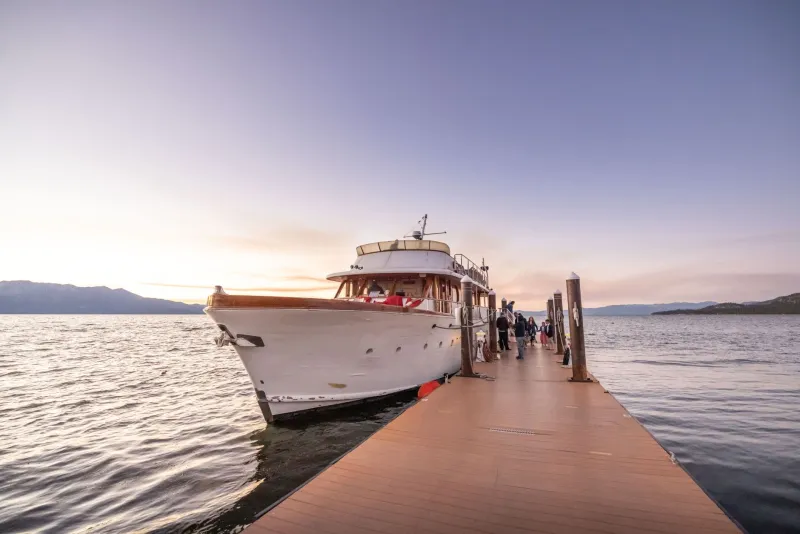
There is a moment, suspended between the ordinary world and the open sea, when everything changes. The last dockline slackens. The hull breathes away from the pier. The engines shift from idle to purpose. For most travelers, this moment passes unnoticed—a brief administrative interlude before the real experience begins somewhere far ahead on the horizon. For the most thoughtful charterers, however, this moment is the experience. Or at least, its first and most consequential chapter.
The art of departure is among the most underestimated dimensions of luxury yacht chartering. Where guests go, and what awaits them there, receives exhaustive attention. How they leave, and what that leaving is allowed to mean, rarely does. Yet those who have chartered with genuine intentionality—who have sailed often enough to recognize the difference between a voyage that transforms and one that merely relocates—will tell you that the quality of a departure shapes everything downstream.
The Sensory Architecture of Leaving
Departure is, before anything else, a multisensory event. It arrives in layers.
There is sound: the low, authoritative thrum of engines warming beneath the deck; the soft percussion of lines coiling on teak; the brief, clipped exchanges between crew members whose movements carry the quiet confidence of long rehearsal. At many American marinas—from Newport, Rhode Island to San Diego's Shelter Island—the ambient noise of the harbor provides a kind of farewell score: the cry of gulls, the rhythmic clang of a halyard against aluminum mast, the distant call of a foghorn that seems to be speaking directly to the departing vessel.
There is scent: diesel and brine in a ratio that, once memorized, becomes permanently associated with freedom. Salt air, warmer near the surface than one expects. The faint trace of teak oil applied by a crew member that morning, as if the boat itself had dressed for the occasion.
And there is the physical sensation of release—felt not just in the hull but in the body. The slight forward lean as engines engage. The gentle oscillation as the vessel finds open water and begins its conversation with the sea. These sensory cues are not incidental. They are informational. They communicate to the nervous system that something has changed, that the ordinary has been left behind, that a different mode of being is now available.
Why Choreography Matters
The finest charter operators understand that departure is a performance—not in any theatrical or artificial sense, but in the truest meaning of the word: a series of actions, executed with skill, that produces an effect greater than the sum of its parts.
A well-orchestrated departure involves the precise choreography of crew and guests in a way that feels effortless rather than managed. The captain has already reviewed conditions and set a heading. The first mate oversees the casting off of lines with an economy of motion that speaks of thousands of hours at the dock. Crew members who are not directly engaged in the departure have positioned themselves to be present but unobtrusive—available if needed, invisible if not.
Guests, meanwhile, are given a role in this choreography, even if they are unaware of it. A thoughtful chief stewardess might have champagne or a morning cocktail waiting at the stern, not as a cliché, but as an invitation to be present—to stand at the rail, glass in hand, and watch the marina recede with the attention it deserves. Some operators go further, creating what might be called a departure ritual: a brief gathering on the foredeck, a few words from the captain about the journey ahead, a moment of collective orientation before the vessel commits to open water.
These are not theatrical gestures. They are psychological anchors—practices that signal to everyone aboard that what is beginning now is distinct from what was left behind.
The Psychology of the Threshold
Human beings are creatures of ritual, even those who would not describe themselves as such. We mark transitions—birthdays, graduations, departures—because unmarked transitions tend to feel incomplete. The mind requires a signal that one chapter has closed and another has opened.
This is precisely why a rushed or chaotic departure can quietly undermine an otherwise flawless charter. When guests scramble aboard at the last moment, when crew members are still resolving logistical questions as lines are cast, when the vessel moves away from the dock without any sense of ceremony or intention, the psychological transition that should accompany the physical one fails to occur. Guests may find themselves geographically at sea while mentally still onshore—still processing emails, still rehearsing conversations, still inhabiting the world they theoretically left behind.
Conversely, when departure is treated as a threshold—approached with deliberateness, marked with sensory richness, and allowed to unfold at a pace that permits genuine absorption—the psychological shift happens quickly and completely. The voyage begins not at the first anchorage, but at the moment the dock disappears from view, and one realizes, with something approaching wonder, that there is nowhere else to be.
What the Most Refined Charterers Do Differently
Experienced luxury charterers—those who have sailed extensively in the Caribbean, the Pacific Northwest, and the waters of the Mediterranean—tend to develop their own departure customs over time. Some request that phones be set aside for the first hour underway. Others ask the crew to observe a brief silence as the vessel clears the harbor mouth, a moment of collective attention to the sea ahead. Still others build in a deliberate pause at anchor just outside the marina, a kind of decompression chamber between the land world and the sea world, before committing to the open water passage.
What unites these practices is intentionality. The charterer has decided that departure is not a logistical necessity to be endured before the real experience begins. It is, itself, the beginning of the real experience.
Charter operators who understand this tend to attract a particular kind of guest—one who is not merely seeking a change of scenery, but a genuine transformation of perspective. These are travelers who recognize that the sea offers something unavailable on land: a complete and enforced presence, a world in which the horizon is the only agenda.
Designing Your Own Departure
For those planning a charter with ACICO Yachts, the departure conversation is worth having early. Discuss with your charter broker and captain what a meaningful departure might look like for your group. Consider the time of day—an early morning departure, with the harbor quiet and the light low and golden, carries a different emotional charge than an afternoon departure in full sun. Consider the pace—there is rarely a reason to rush away from the dock, and every reason to linger in the threshold moment.
Consider, too, what you want to leave behind. The most powerful departures are those in which something is consciously relinquished—a schedule, a preoccupation, a way of moving through the world that no longer serves. The sound of a dockline hitting the water is, if you allow it to be, the sound of that relinquishment made real.
The sea has always been a place of transformation. But transformation does not wait patiently at the destination. It begins the moment you choose to leave.