The Discipline of Stillness: How Blank Days at Anchor Are Becoming the Most Coveted Luxury in Yacht Chartering
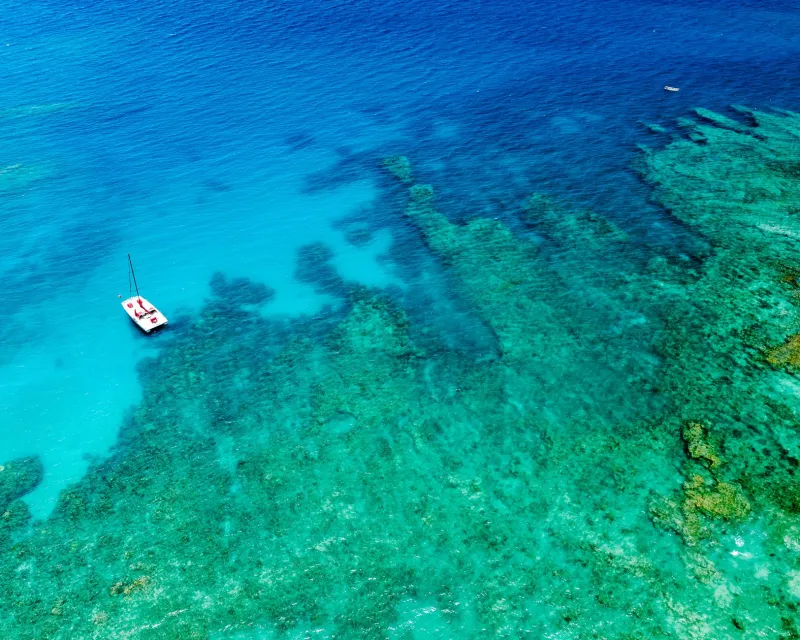
There is a particular kind of morning that seasoned charter guests describe with something approaching reverence. The anchor is set in a protected cove. The water is glass-flat and the color of pale jade. Breakfast has been laid, but no one is rushing toward it. There is nowhere to be, no tender excursion penciled in for nine o'clock, no shoreside reservation to honor. The day stretches forward without obligation, and for a certain category of high-achieving traveler, that blankness is more disorienting—and ultimately more restorative—than any curated itinerary could ever be.
This is the quiet revolution unfolding aboard the world's finest charter yachts. Where guests once arrived with color-coded schedules and ambitions to cover as much water as possible, a growing cohort of the wealthiest charterers in the American market are doing something far more countercultural: they are deliberately building empty days into their voyages and treating unstructured time not as a failure of planning, but as its highest expression.
The Productivity Paradox on the Open Water
The cultural context is worth examining. For many of the executives, founders, and professionals who represent the core of the luxury charter market, downtime carries a faint but persistent guilt. American professional culture, in particular, has long equated busyness with worth. The calendar as status symbol. The packed itinerary as proof of a life well-spent.
A yacht charter, at first glance, can seem to reinforce this instinct. There are islands to visit, dive sites to tick off, restaurants ashore to secure reservations at. The sheer abundance of possibility in destinations like the British Virgin Islands, the Sea of Cortez, or the waters off Maine can trigger the same acquisitive reflex that drives a packed business trip.
But experienced charter captains report a consistent pattern: guests who arrive with the fullest itineraries are often the ones who, by day three, quietly ask whether they might simply stay put for a while. The sea has a way of exposing the exhaustion that productivity culture keeps carefully concealed.
What Captains Are Observing
Veteran charter captains across the Caribbean and Pacific Coast report that the conversation around itinerary design has shifted meaningfully over the past several years. Guests are arriving with a more sophisticated understanding of what a charter can offer—and a growing willingness to treat the vessel itself as the destination rather than a vehicle to reach one.
The requests are telling. Guests asking for anchorages where the tender stays aboard. Mornings where the crew is instructed not to propose activities unless asked. Afternoons given over entirely to the rhythm of the boat—the creak of rigging, the movement of light across the water, the particular silence that exists only when a vessel is at rest in a sheltered bay.
For captains, this shift requires its own form of professional recalibration. The instinct to offer, to suggest, to facilitate must be balanced against the guest's deeper need to simply be left alone in a beautiful place. The finest crews, those who truly understand the art of hospitality at sea, have learned to read this need and honor it without making it feel like neglect.
The Psychology of Purposeful Leisure
What is actually happening, psychologically, when a high-performing individual surrenders to an unscheduled day at anchor? Researchers who study restorative environments have long noted that natural settings—particularly water—engage what is sometimes called involuntary attention, a gentle, effortless form of awareness that allows the directed attention systems we use for work and decision-making to genuinely recover.
The implications for yacht chartering are significant. The environment of a well-chosen anchorage—the visual complexity of light on water, the sounds of the natural world, the absence of digital interruption—creates conditions that are almost neurologically ideal for deep rest. Not sleep, necessarily, but the kind of alert, receptive stillness that most people have not experienced since childhood.
Guests who have embraced blank days report effects that persist well beyond the charter itself: clearer thinking, reduced anxiety, a recalibrated sense of what actually matters. For many, the idle afternoon spent reading in a hammock strung between the bow rails, or simply floating in warm water off the stern, becomes the memory that endures longest after the voyage ends.
Designing a Charter That Honors Stillness
For those considering incorporating blank days into their next charter, the approach requires some intentionality—which is, admittedly, a certain irony worth acknowledging.
Choose your anchorages with care. The quality of an idle day is directly tied to the quality of the place where you choose to be still. Work with your charter broker to identify anchorages that offer natural beauty, protection from swell, and a degree of solitude. Crowded marina berths and busy resort bays are not conducive to the kind of quiet the exercise demands.
Communicate your intentions to your crew. A well-briefed crew is essential. Make clear before departure that certain days are designated as unstructured, and that the default posture should be attentive availability rather than proactive programming. The best crews will understand immediately; in fact, many will quietly appreciate the permission to operate at a more measured pace themselves.
Resist the urge to fill the silence digitally. The temptation to replace the structured itinerary with a structured media consumption schedule—streaming, social posting, email—defeats the purpose entirely. Consider establishing informal agreements among your group about device use during blank days. The water will hold your attention far more generously than any screen.
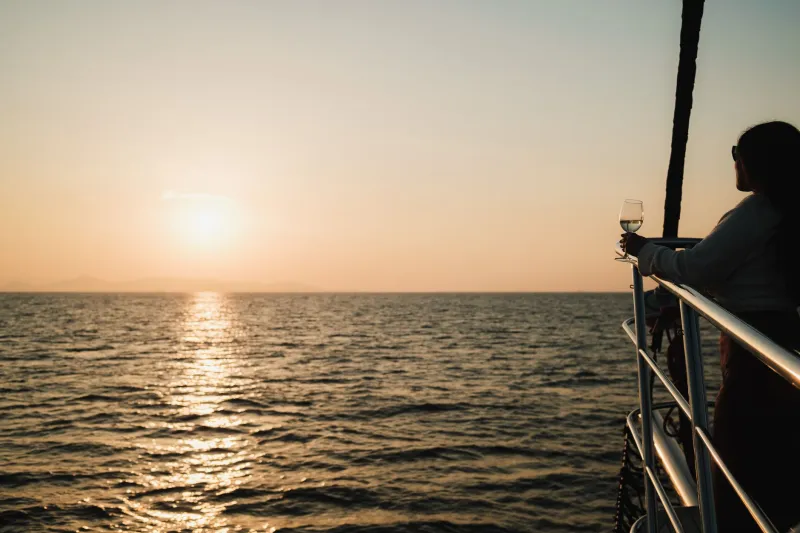
Allow for emergence. The paradox of the blank day is that it often generates its own gentle momentum. A morning of absolute stillness may naturally give way to a spontaneous afternoon snorkel, a long conversation over a late lunch, an impromptu sunset cocktail on the bow. These unplanned moments, precisely because they are unplanned, tend to carry a particular warmth. Let them arise on their own terms.
Stillness as the New Status
There is something quietly radical about a person of significant means choosing, deliberately, to do nothing. In a culture that has spent decades conflating achievement with activity, the ability to be still—genuinely, unhurriedly still—has become its own form of sophistication.
The superyacht, anchored in a cove that most people will never see, is perhaps the ideal theater for this particular luxury. It removes the friction of ordinary life with total efficiency, and then offers something rarer still: the space to remember who you are when no one is asking anything of you.
The most experienced charter guests understand this intuitively. They have visited the famous anchorages, hired the celebrated chefs, covered the celebrated routes. What they return for, season after season, is something more elusive—the particular quality of an afternoon when the world has agreed, for a few hours, to ask nothing more of them than their presence.
That, in the end, is the most honest definition of luxury the sea has to offer.