Uncharted by Choice: How the Most Discerning Charterers Are Trading Schedules for Serendipity
For decades, the gold standard of a luxury yacht charter was measured, in part, by the precision of its itinerary. A well-drafted voyage plan—complete with port calls, provisioning schedules, and curated shore excursions mapped to the minute—was considered evidence of expertise. It signaled that a broker understood the destination, that a captain had command of logistics, and that a guest's time would not be squandered.
That standard is quietly being overturned.
Across the charter industry, a growing contingent of experienced, high-net-worth travelers is arriving at the dock with something conspicuously absent from their luggage: a fixed plan. These are not first-time charterers overwhelmed by choices. They are, in many cases, veterans of multiple voyages—clients who have had the meticulous itinerary, who have ticked the celebrated anchorages off their lists, and who have arrived at a more sophisticated conclusion. The most extraordinary experiences at sea, they have learned, are rarely the ones that were scheduled.
The Paradox of the Perfectly Planned Charter
There is a particular irony embedded in the conventional approach to yacht chartering. The very precision that promises an exceptional voyage can, in practice, insulate guests from the unexpected encounters that define a journey for years afterward. A rigid schedule means departing a bay at dawn because the itinerary says so—even when the morning light is painting the cliffs in a way that demands another hour of stillness. It means skipping the fishing village that appeared off the port bow because it wasn't on the chart of approved stops.
Captain Renata Voss, who has skippered superyachts across the Caribbean and the Pacific Northwest for over fifteen years, describes this tension candidly. "The guests who come aboard with a printed schedule often spend the first three days checking boxes," she says. "By day four, they've relaxed enough to actually see where they are. The ones who come with no fixed plan—or a very loose one—they're present from the first morning."
This is not a fringe observation. Charter brokers at the upper end of the market report a measurable shift in how their most seasoned clients approach the pre-departure planning conversation. Rather than requesting a detailed port-by-port breakdown, these clients are increasingly asking a different question: What would you do if the weather changed?
Flexibility as a Design Principle
The shift toward intuitive, responsive navigation is frequently mischaracterized as a rejection of planning. In practice, the opposite is true. Executing a genuinely spontaneous charter requires more preparation than a conventional itinerary—not less.
The framework is sometimes called "soft routing" within the industry: a methodology in which a vessel establishes a general direction of travel and a handful of preferred anchorages, while leaving the connective tissue of the voyage deliberately open. The captain monitors weather windows in real time, consults local knowledge networks, and makes daily routing decisions based on conditions rather than a calendar.
For this to work seamlessly, the provisioning must be comprehensive enough to support multiple contingencies. The crew must be briefed not on a fixed sequence of events but on a range of guest preferences—a preference for solitude over social marinas, say, or a desire to prioritize snorkeling over historic sites. The yacht itself must be stocked and fueled for range, capable of pivoting north or south without a resupply scramble.
"The logistics are actually more complex," acknowledges Marcus Delray, a Miami-based charter broker who specializes in Caribbean and Bahamian voyages. "But when it works—and it almost always does when the captain and crew are experienced—the result is a charter that feels genuinely alive. Guests stop being tourists moving through a destination and start becoming travelers of it."
The Psychology of Surrendering Control
For many high-achieving Americans accustomed to optimizing every professional and personal variable, relinquishing control over a significant vacation investment is not an instinctive act. The impulse to justify cost through density of experience—more ports, more activities, more boxes checked—runs deep in a culture that prizes productivity.
And yet, the guests who have made the transition consistently describe it in the same terms: relief. The removal of a fixed schedule, once accepted, functions less like an absence of structure and more like a different kind of permission. Permission to linger. Permission to return to the same cove twice. Permission to declare a day at anchor simply because the water is too clear to leave.
Dr. Simone Aldridge, a behavioral psychologist who consults with luxury travel brands on client experience design, frames it this way: "What we're seeing is a small but influential group of travelers who have effectively graduated from achievement-based vacation to presence-based vacation. They've stopped trying to collect experiences and started trying to inhabit them."
The superyacht, she notes, is a uniquely enabling environment for this transition. Unlike a land-based itinerary—where changing plans may involve renegotiating hotels, ground transportation, and tour operators—a self-contained vessel can respond to impulse with remarkable fluidity. The infrastructure of comfort travels with the guest. The only variable is direction.
What Captains Know That Itineraries Cannot
Perhaps the most compelling argument for intuitive navigation is also the simplest: experienced captains carry knowledge that no pre-departure research can replicate.
A captain who has sailed a coastline across multiple seasons understands which anchorages shelter best from the prevailing afternoon winds of August. She knows which fishing communities welcome visiting yachts with genuine warmth and which have grown weary of charter traffic. He knows that the waterfall marked on the cruising guide is only accessible after three days of rain, and that last Tuesday it rained for four.
When guests grant their captain genuine routing authority—rather than simply asking for confirmation of a pre-set plan—they are, in effect, purchasing access to that accumulated intelligence. The result, in the experience of many who have tried it, is a voyage that feels less like a luxury product being delivered and more like a collaboration between human curiosity and maritime expertise.
"My best charters are the ones where the guests say: 'You know this water. Show us what you love about it,'" Captain Voss reflects. "Those are the voyages people talk about for the rest of their lives."
A Different Kind of Arrival
The trend toward schedule-free chartering reflects something broader occurring at the intersection of luxury travel and contemporary values. Among the most discerning travelers, the definition of exclusivity is shifting—away from access to physical places and toward access to a quality of experience that cannot be manufactured or mass-produced.
Serendipity, by its nature, cannot be packaged. It cannot be listed in a charter brochure or guaranteed by a broker. It arrives, when it arrives, as a consequence of readiness: a vessel properly prepared, a crew genuinely skilled, and a guest willing to release the itinerary and trust the sea.
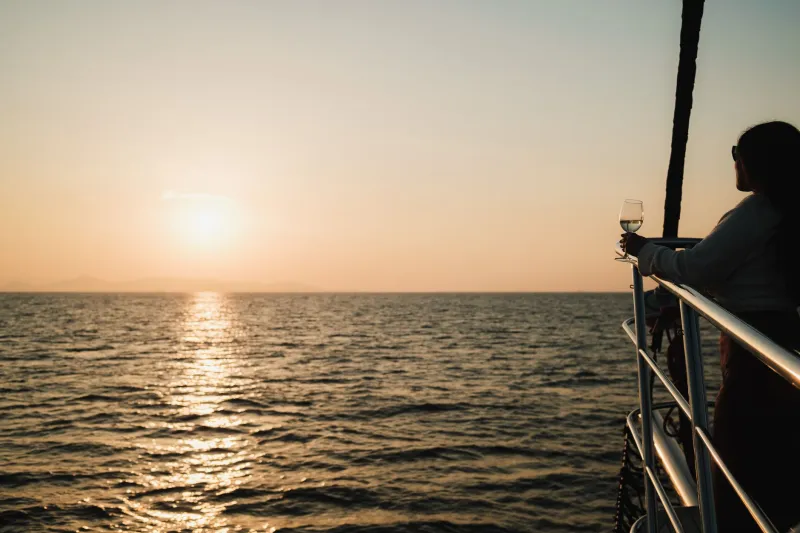
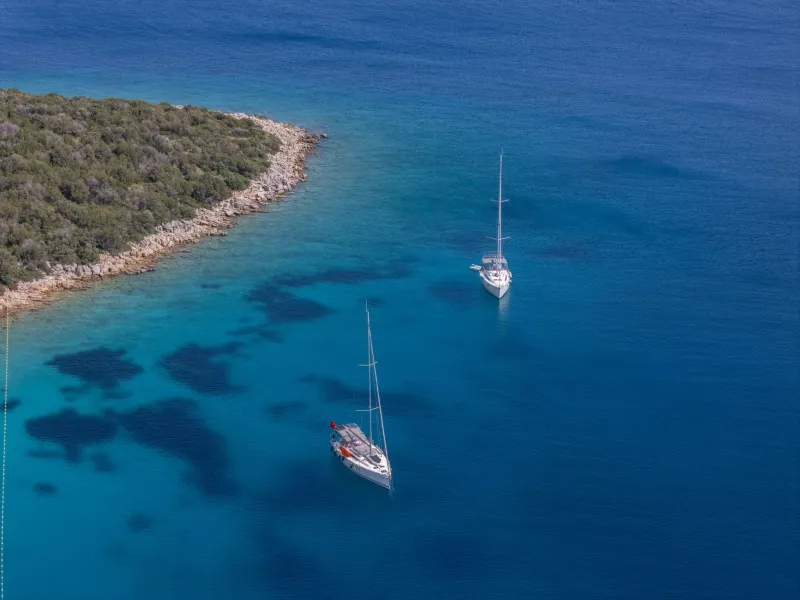
For those who have made that exchange, the return on investment is measured not in destinations visited but in mornings remembered—the unexpected cove, the unplanned conversation with a local fisherman, the sunset over water that no one had planned to be watching from that particular anchorage at that particular hour.
Those are the moments that do not appear on any chart. And increasingly, they are exactly what the most sophisticated charterers are sailing to find.