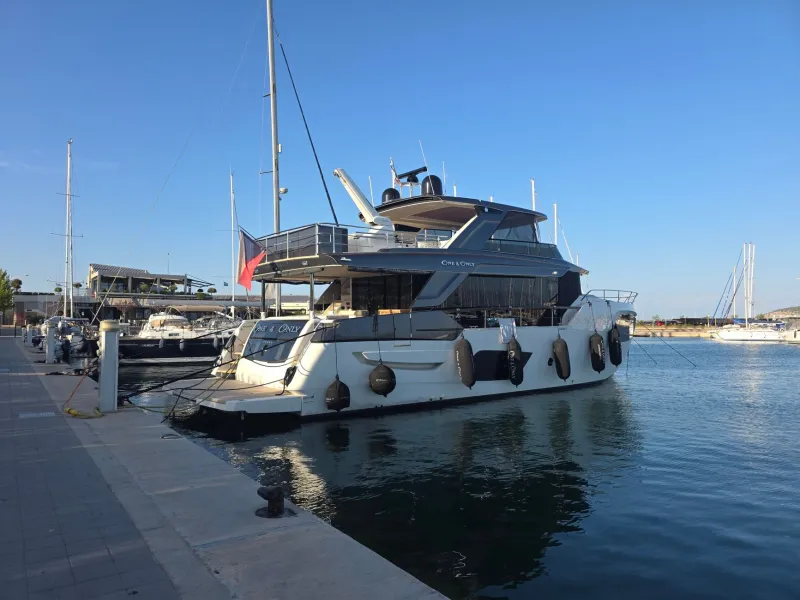
The Beach House Is Losing: Why America's Family Reunion Is Moving Offshore
Photo: Warner, Marion G., 1861-1922, Public domain, via Wikimedia Commons
For decades, the American family reunion followed a familiar script: a large rental house on the shore of Cape Cod, the Hamptons, or the Carolinas, a week of shared kitchens and competing beach chairs, and a quiet agreement never to speak of the dishwasher dispute. Increasingly, families with the means to do so are rewriting that script — and the new setting is a chartered yacht.
Why the Shore House Stopped Working
The traditional rental model carries structural flaws that no amount of square footage fixes. Guests scatter. Teenagers retreat to their rooms with their phones. Grandparents are stranded at the house while the younger generation drives to attractions. The kitchen becomes a battleground, and the very togetherness the week was meant to produce dissolves into parallel vacations under one roof.
A yacht solves this by design. A 150-foot vessel cannot be escaped in the way a sprawling house can — yet it never feels confined, because the world outside the hull changes daily. Boredom, the great enemy of the family holiday, has remarkably few places to hide aboard a well-run charter.
The Teenager Problem, Solved
Skeptics assume adolescents will revolt without Wi-Fi and solitude. In practice, the opposite tends to occur. A well-equipped yacht offers a rotating menu of stimulation — wakeboarding off the swim platform, seabobs, fishing, paddleboards, water slides inflated off the aft deck — that no shore house can match. Charter crews report that teenagers who arrive glued to their phones are, by day three, organizing the dinghy races themselves.
Designing for Three Generations
The best family charters are engineered from the cabin up:
- Grandparent-friendly staterooms on the main deck, steps from the salon, eliminating stairways and long corridors
- Kid-safe water programs with certified instructors, age-appropriate equipment, and clear protocols for swimmers and non-swimmers alike
- Flexible dining — children eating early with a caregiver while adults linger over a later seating
- Itineraries with short hops, so no leg of the voyage tests anyone's patience
The Bahamas and the Sea of Cortez remain the workhorses of American family charters for exactly this reason: calm, sheltered waters, short passages, and anchorages that offer something for every age within a tender ride.
The Privacy Dividend
There is a further argument, less often voiced: discretion. A yacht at anchor is, by definition, private. Families who value seclusion — whether from public attention or simply from the obligations of ordinary life — find that a charter offers a level of enclosure no resort or rental can provide. The guest list is the family and the crew; nothing else gets aboard.
An Annual Tradition, Reframed
The strongest case for the family charter is not any single amenity but the pattern it creates. Families who charter annually describe a tradition that compounds: the same crew welcoming back the same children, now a year taller; the same anchorage requested each June; the same card game resumed at the same salon table. The beach house offered a place. The yacht, it turns out, offers a ritual — and rituals are what families actually remember.