Where the Charts End and Wonder Begins: Mastering the Art of the Secret Anchorage
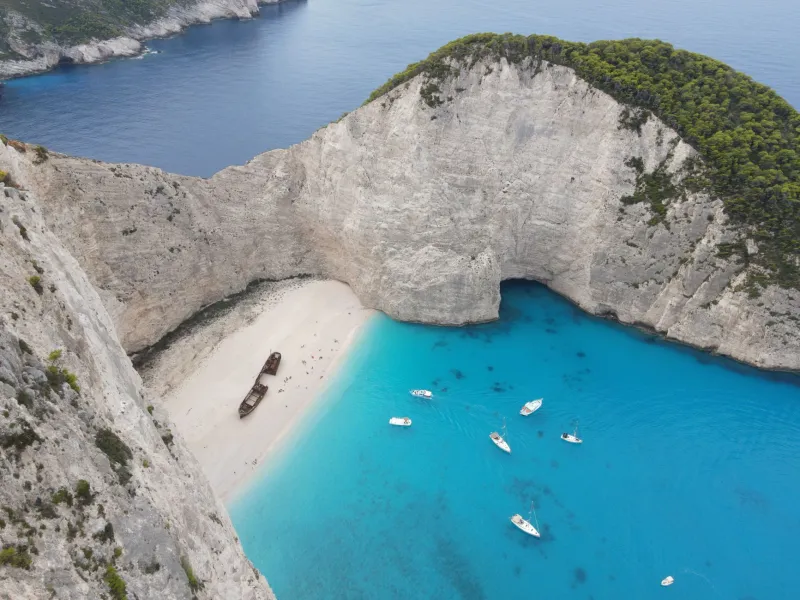
There exists a category of place that no hotel concierge can book, no tour operator can sell, and no rideshare application can navigate toward. It is the hidden cove discovered at golden hour, its glassy surface unmarked by another vessel, its shoreline untouched by the infrastructure of mass tourism. For guests aboard a private luxury yacht charter, this kind of discovery is not a matter of luck — it is the product of expertise, preparation, and an intimate understanding of how water, land, and depth conspire to create perfection.
At ACICO Yachts, we regard the pursuit of the exceptional anchorage as one of the highest expressions of the charter experience. What follows is an exploration of the knowledge and sensibility that separates a memorable overnight stop from a truly transformative one.
The Captain as Cartographer
Modern navigation technology has democratized access to charts, yet the ability to interpret those charts remains a deeply human skill. An experienced captain does not simply read a nautical chart — they translate it. Depth contours, bottom composition notations, tidal range indicators, and the subtle topographical language of a coastline all converge into something closer to intuition than calculation.
Bathymetry — the study of underwater topography — is perhaps the most underappreciated discipline in recreational sailing. Where a casual observer sees only open water, a seasoned captain reads a story: a gradual shoaling that suggests a protected sandy bottom ideal for anchoring, a submerged ridge that promises shelter from the prevailing swell, or a sudden depth change that signals the presence of a natural harbor carved by centuries of tidal movement.
This expertise is precisely what elevates a luxury yacht charter beyond mere transportation. Your captain is not simply moving the vessel from point A to point B — they are actively reading the environment and translating it into experiences that land-based travelers will never access.
Reading the American Coastline
The United States offers a staggering diversity of anchorage possibilities, each region possessing its own distinct character and its own set of navigational considerations.
The Maine Island Network remains among the most rewarding cruising grounds in the entire Western Hemisphere for those willing to venture beyond the well-worn paths to Bar Harbor and Rockport. The working archipelago stretching Down East — past Stonington, through the Deer Isle Thoroughfare, and into the quieter reaches of Merchant Row — contains dozens of coves accessible only to shallow-draft vessels. Here, the bottom is predominantly mud and clay, offering exceptional holding for a Rocna or Mantus anchor, and the surrounding spruce forests descend directly to the waterline, creating a seclusion so complete that the nearest sound is often only the cry of an osprey.
The Florida Keys backcountry presents an entirely different calculus. The shallow-water flats west of the main island chain demand careful attention to tidal timing and draft limitations, yet they reward that diligence with something extraordinary: anchorages set against a backdrop of infinite turquoise, where the horizon dissolves into sky and the only neighbors are the permit fish moving silently across the turtle grass below. An experienced captain with knowledge of these waters can position a yacht within a natural basin invisible from the main channel, offering both privacy and a front-row view of some of the most spectacular sunsets in North America.
The San Juan Islands of Washington State offer yet another register of discovery. The convergence of Canadian and American waters in this archipelago creates a navigational complexity that rewards expert seamanship. Tidal currents here can run at six knots or more through the narrower passages, making timing as critical as chart-reading. Those who master the rhythm of these waters find themselves rewarded with anchorages of singular beauty — forested shores, bald eagles overhead, and the occasional orca pod moving through the deeper channels at dawn.
The Unspoken Etiquette of the Anchorage
Access to remote anchorages carries with it a set of responsibilities that the most experienced charter guests understand intuitively. The etiquette of the anchorage is not codified in regulation — it lives in the culture of serious sailors, passed between captains and refined over generations.
The most fundamental principle is the rule of the first arrival. A vessel already at anchor in a secluded cove has established a claim of sorts — not a legal one, but a social and moral one. Anchoring uncomfortably close to an existing vessel, particularly in a space large enough to accommodate distance, is considered a significant breach of maritime courtesy. The appropriate response upon finding an occupied anchorage is to either maintain a generous distance or, if the cove is too small, to seek another location entirely.
Environmental stewardship is equally non-negotiable. The very qualities that make a secret anchorage worth seeking — its pristine condition, its undisturbed marine life, its absence of human detritus — are qualities that can be degraded in a single careless visit. Responsible anchoring means selecting bottom composition carefully to avoid dragging across coral or seagrass, using holding tanks without exception, and departing without evidence of one's presence.
There is also the matter of sound. A secluded anchorage is, by its nature, a quiet place. The introduction of amplified music, loud conversation, or generator noise into such an environment is a disruption that extends beyond the social — it diminishes the very quality of solitude that made the anchorage worth finding.
The Overnight Reward
For all the craft involved in finding and claiming the perfect anchorage, the experience itself is deceptively simple. It is the absence of things — crowds, schedules, ambient noise, the relentless stimulation of resort life — that defines the overnight anchorage as a luxury in its most elemental form.
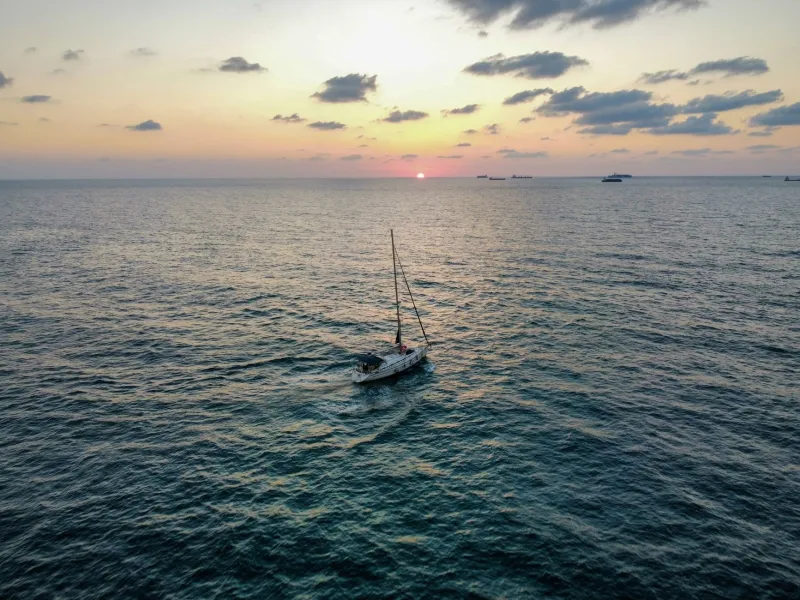
At anchor in a hidden cove, the evening unfolds according to its own logic. The light changes in ways that no land-based vantage point can replicate, the water reflecting the sky through colors that move from copper to violet to the deep blue of full dark. Dinner is served on the aft deck. Conversation slows to match the pace of the water. The stars emerge without competition from artificial light. And in the morning, there is the particular pleasure of waking in a place that belongs, for this one night, entirely to you.
This is the promise at the heart of the luxury yacht charter experience — not merely comfort or service, but access. Access to places that cannot be reached by any other means, discovered through expertise that cannot be replicated by any application, and appreciated through a stillness that the modern world makes increasingly rare.
The art of the secret anchorage is, ultimately, the art of being genuinely, completely, and unreservedly somewhere.