What the Water Knows: The Invisible Mastery Behind Every Exceptional Yacht Captain
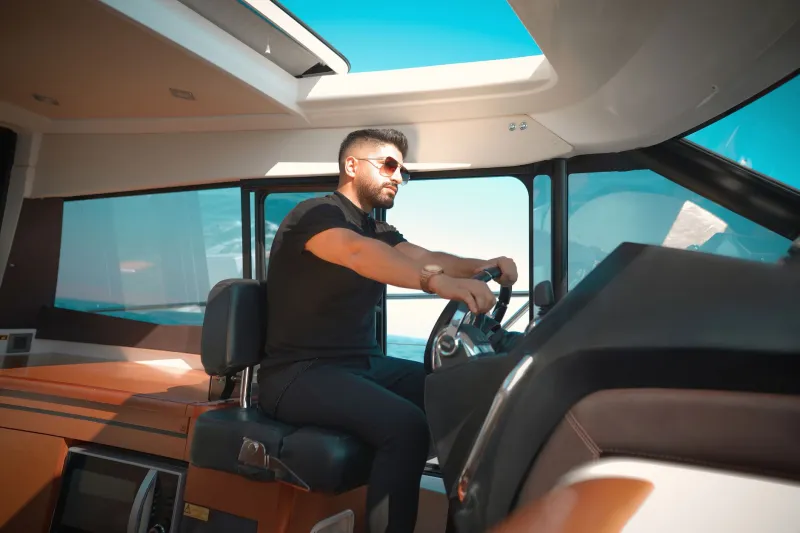
There is a particular kind of silence that descends on a well-run yacht—a hush that has nothing to do with the absence of sound and everything to do with the presence of competence. Glasses remain upright as the vessel shifts course. Dinner is served precisely as the anchorage calms. A squall that might have unsettled guests on a lesser charter passes harmlessly astern, as though it had been diplomatically redirected. None of this happens by accident. It is the product of a mastery so practiced it becomes invisible, and it is the defining characteristic of the world's most exceptional yacht captains.
For the discerning charterer—someone who has sailed enough to know the difference between a capable voyage and a truly transcendent one—learning to recognize these moments of quiet expertise adds an entirely new dimension to life aboard. It is, in a sense, learning to read the same language the ocean speaks.
The Sky as a Living Document
Long before satellite weather systems and high-resolution routing software existed, mariners built their understanding of the atmosphere through direct observation. That tradition has not been abandoned by elite captains; it has been refined. The most accomplished skippers treat meteorological data not as a verdict but as a starting point—a framework to be interrogated against what they see, smell, and feel.
A subtle shift in the color of the horizon at dawn. The particular way cirrus clouds feather across the upper atmosphere. The behavior of birds, which often abandon certain flight corridors hours before conditions deteriorate. These are not superstitions. They are accumulated observations, layered over years of offshore experience, that allow a seasoned captain to sense atmospheric transitions before instruments confirm them.
For guests aboard a luxury charter, this translates into something felt rather than seen: the decision to depart an anchorage an hour earlier than planned, the choice to run inside a barrier reef rather than through open water, the quiet instruction to secure loose items on deck before anyone else notices the wind freshening. These small acts of foresight are the signature of mastery, and they are worth noticing.
Reading the Water Itself
The ocean's surface is among the most information-dense environments on earth, and a master mariner reads it the way a scholar reads a text—with attention, skepticism, and a willingness to look beneath the obvious.
Swell patterns reveal distant weather systems days before they arrive locally. Color variations in the water indicate depth changes, thermoclines, and the presence of currents that can affect both speed and comfort. The way chop organizes itself—its period, its direction relative to the wind, the whitecap threshold—tells an experienced eye whether conditions are building or easing, and at what rate.
In the waters off the Pacific Coast, where cold California Current upwellings meet warmer offshore water, these readings carry particular consequence. In the Florida Keys or along the Intracoastal Waterway, tidal dynamics and shoaling require a different but equally nuanced literacy. Elite captains who operate across multiple regions develop a kind of geographic fluency, adjusting their interpretive framework as the water changes beneath them.
This is not knowledge that can be acquired from a manual. It accumulates through years of watchkeeping, through thousands of hours spent observing the relationship between cause and effect at sea. Guests who understand this will recognize that the captain's unhurried pause before a navigational decision is not hesitation—it is consultation with an extraordinary internal archive.
Intuition as Instrument
Perhaps the most misunderstood element of maritime mastery is intuition—the capacity to make sound decisions in conditions of incomplete information, under time pressure, without the luxury of deliberate analysis. In popular culture, intuition is often romanticized as something mystical. Among serious mariners, it is understood as something far more practical: the rapid synthesis of pattern recognition built over a career.
When a captain orders a course change that cannot be immediately explained, or declines an anchorage that appears perfectly adequate on the chart, or insists on an earlier departure than the weather forecast strictly demands, they are not being arbitrary. They are acting on a convergence of signals—some conscious, some not—that their experience has taught them to trust.
The best charter captains are also exceptional communicators of this instinct. They do not issue cryptic commands and retreat to the wheelhouse. They explain, in measured and accessible terms, what they are perceiving and why it informs their decision. This transparency transforms what might otherwise feel like an inconvenience into an education, and it deepens the guest's relationship with the voyage itself.
Crew as an Extension of Awareness
Mastery aboard a luxury yacht is not confined to the captain's chair. On the finest vessels, situational awareness permeates the entire crew hierarchy. The first mate who notices a guest reaching for a handhold before a wake arrives. The deckhand who adjusts a fender without being asked as the wind shifts at the dock. The engineer who identifies an irregular engine note during a routine check before it develops into something more consequential.
This distributed vigilance is the product of leadership as much as individual skill. Captains who model attentiveness—who slow down in their own observations, who ask questions rather than issue only directives—cultivate crews that extend their perceptual reach across every corner of the vessel. The result is an environment where problems are addressed before they become visible to guests, where comfort is maintained as a matter of professional pride rather than reactive management.
For charterers assembling a vessel and crew through a reputable broker, this crew culture is worth inquiring about directly. Ask how the captain approaches weather routing conversations with guests. Ask whether the crew conducts pre-departure briefings that go beyond safety procedures. These questions reveal far more about the quality of the experience ahead than the vessel's specification sheet ever will.
The Gift of Noticing
There is a final dimension to this conversation that belongs entirely to the guest. The art of anticipation, as practiced by master mariners, is ultimately a form of deep attention—a commitment to remaining present to the environment, to reading signals before they become obvious, to making decisions that honor complexity rather than simplify it.
Charterers who bring this same quality of attention to their voyages discover that the ocean rewards it generously. The phosphorescent bloom that appears only when the vessel slows to drifting speed. The moment a weather system breaks and the light changes in a way that cannot be photographed but will never be forgotten. The quiet pride of knowing, because your captain told you, that the anchorage you are resting in tonight was chosen hours ago for reasons that only became apparent as the afternoon unfolded.
These are not incidental pleasures. They are the substance of what separates a charter from a mere vacation—the difference between moving through a beautiful place and genuinely inhabiting it. And at their center, always, is the invisible mastery of those who read the water so fluently that the ocean itself seems to cooperate.
At ACICO Yachts, we believe the highest form of maritime luxury is not measured in square footage or amenities alone. It is found in the quality of the people who stand watch, who read the sky before breakfast, and who make the imperceptible decisions that allow every moment aboard to feel effortless. That is the art of anticipation. And once you learn to see it, you will never experience the sea the same way again.